

'/%3E%3Cpath%20fill='%23b2b2b2'%20d='M241%20382q0%2016%2017%2026%2017%2011%2042%2011t42-11q16-11%2017-26V269H241'/%3E%3Cpath%20fill='%239f7e00'%20d='M241%20379q0%2014%208%2023%209%209%2021%209%2014%200%2021-9%209-9%209-23V269h-59'/%3E%3Cpath%20d='M241%20339v-70h59v110q0%2014-9%2023l-6%205v-68h-15v72q-8%200-14-4v-68zm59%2040c0%2022%2015%2032%2029%2032%2021%200%2030-18%2030-32v-40h-59'/%3E%3Cpath%20fill='%239f7e00'%20d='M266%20277v5h2v12h-3v-5h2v-5h-9v5h2v5h-4v9h3v18h-5v10h34v-10h-5v-18h3v-9h-4v-5h2v-5h-9v5h2v5h-3v-12h2v-5zm42%20101q0%2010%206%2017%206%206%2015%207%2010-1%2016-7%206-7%206-17v-29h-43'/%3E%3Ccircle%20fill='%230044ad'%20cx='329.5'%20cy='372'%20r='6'/%3E%3Cellipse%20fill='%230044ad'%20cx='300'%20cy='340'%20rx='16'%20ry='21'/%3E%3C/svg%3E)
'/%3E%3C/svg%3E)
Summary
Choosing rugs that endure more than just one season.
We’ve all been there. Temperatures drop and we feel cold, but do our horses?
Picture this:
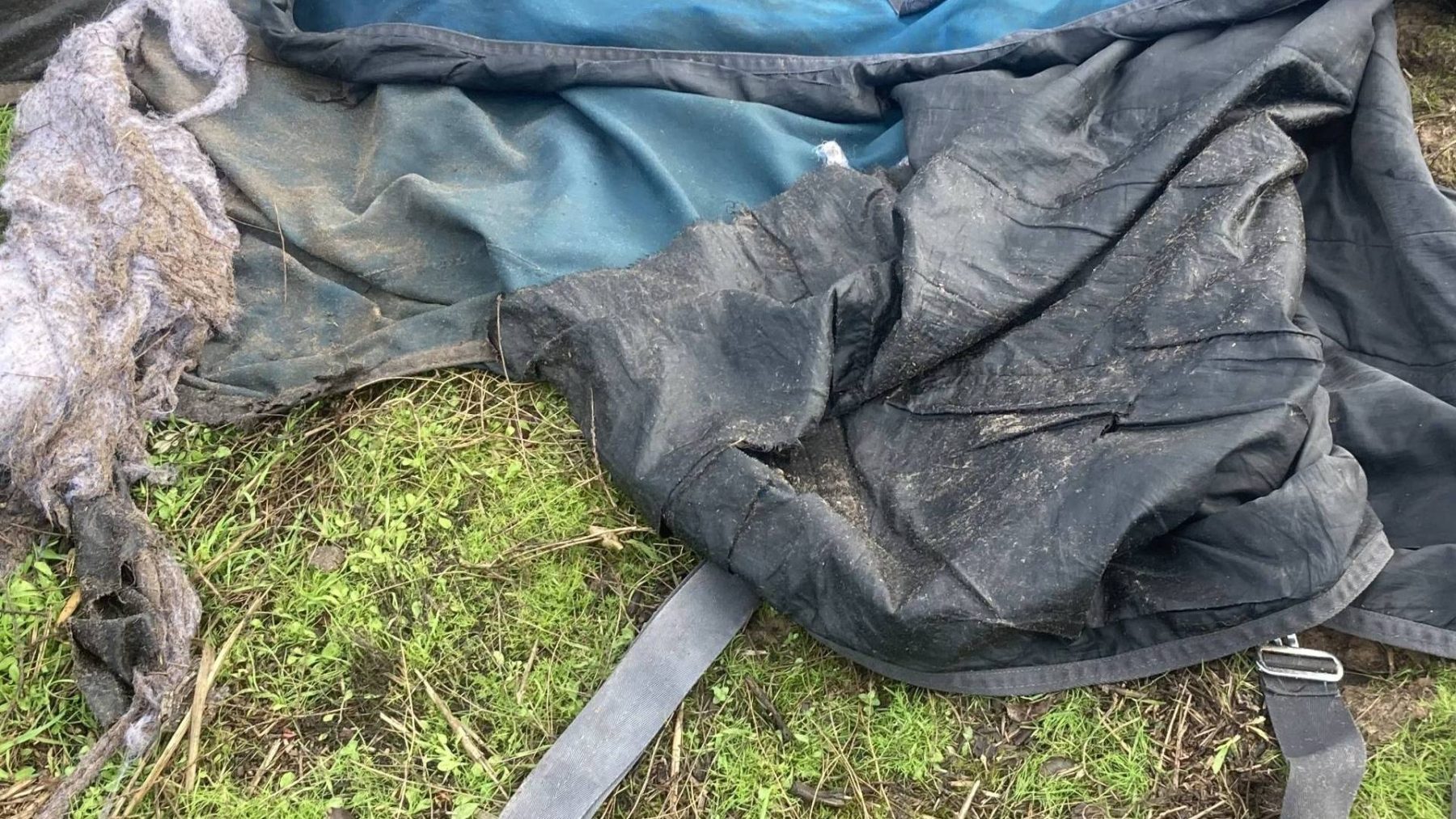
The sun goes down. We reach for our down jackets to head to the paddock to wrap our equine friend in his rug to snuggle up for the night. The sun comes out, we head to the paddock to feed breakfast, and we find the expensive rug shredded to pieces.
Am I imagining it, or is my horse grinning from ear to ear? Or is it his paddock mate? Either way, it is frustrating to see our rug, bought with love, now sporting holes and digging yet another hole into our finances.
Sounds familiar? Here are some tips to try—they are horses, after all—to prevent this scenario from repeating itself.
The Perfect Temperature
Sometimes we think our equine partners must feel cold and we overprotect them. Their way of telling us they actually feel too warm ranges from quietly enduring sweating underneath their rugs to ripping them off their bodies.
TIP: It may seem intuitive, but I rather check, running my hand under the blanket across the back, to see if I should take it off, than waiting for horses to get louder.
I’ve seen horses rubbing themselves against bushes, with no one listening, until the bush—decorated with tufts of padding—looked like a cotton plant. Guess what? The owners bought another rug, which was doomed to suffer the same fate.
Here is a short guide to getting it right from the start:
- Natural Insulation: Keep in mind that the filling of a rug replaces the horse’s own hair. This is because rugs press down the hair, and can cancel out its natural protection mechanism. Usually, the hair stands up to create a warm, insulating layer. Horses are brilliant at adapting, once you blanket them, they grow less hair to compensate for us adding that artificial layer.
- The Filling: Rug retailers will point you in the right direction regarding which “fill” (weight) to choose.
- Temperature Ranges: The general consensus is that horses with a natural winter coat can deal with temperatures dropping well into minus. However, it also depends on what the horse is used to. Those living in moderate climates with hot summers may well feel colder at plus 5-10 degrees celsius.
How do you know your horse feels the chill? Your equine friend will look uncomfortable, maybe hunching his back and shivering. If you don’t catch him in the act, you may notice weight loss. Older or sick horses are likely to be thinner and, just like us, will feel the cold more.
Crucial Tip: Don’t let your horse sweat under a rug! A rug can become counterproductive if he sweats; if the dampness cannot escape, your horse will actually feel colder. On that note, never put a rug on a wet horse, unless it features a moisture wicking fabric designed to dry sweat.
You may also want to consider a light rainproof turnout sheet (no-fill) for when it is windy and rainy but not yet freezing.
Horses in Stables
We’ve focused on horses living outside, but if your stable is cold, the same rules apply. However, remember that shelter—whether a stable or outdoor trees—offer refuge. Horses with the freedom to move around can also have a “good old gallop” to warm up.
Clipped Horses
Not to forget our clipped competition partners! They need their natural “keep-warm” trick replaced for sure. Rugs are a must for them when it’s cold, rainy, or windy.
Rug Design and Quality
Not all rugs are created equal, nor is it a “one size fits all” scenario. Sometimes I wonder whether some manufacturers have ever put a rug on a horse or bothered to take equine anatomy into account.
Fit: Avoiding Pressure Points and Rubs
On this one, we can’t always blame the manufacturer! There are many styles available, from V-fronts for wide-chested horses to high-neck designs for those with prominent withers.
Steps to ensure a good fit:
1. Measure: Measure your horse according to the specific manufacturer’s instructions, as sizes and designs differ between brands.
2. Try it on: Once the rug arrives, try it on over your horse’s fleece, or a bed sheet cut into shape. This ensures the new rug stays clean in case you need to return it.
3. Check Shoulders: Make sure the rug doesn’t sit too tight around the chest and shoulders. It should allow for free movement and not impinge on the withers.
* Tip: Lift a front leg as if you were cleaning the hoof and pull it slightly forward. Run your fingers inside the shoulder opening—is it tight or still loose?
4. Check the Hind End: A rug that is too tight can restrict movement here as well. Tug on the rug where it sits over the hip; it should stretch quite a bit but not be so loose that it slips entirely to one side.
Preventing Rubs
Rubs are often caused by the front closing mechanism. Ensure the front straps don’t sit directly against the skin. Velcro attachments often fail once hair and hay particles get stuck in them, so if the overlap isn’t sufficient the front of the blanket pulls apart laying the straps bare. In addition, the rug can shift easily causing rubs on the chest and shoulders.
Also, check your hind leg straps. Clipping them diagonally (looping them through each other) usually prevents them from rubbing the inside of the legs.
Closing Mechanisms: A Pet Peeve
Leg straps that attach at the very back lower corner of the rug have proven to be a nightmare, in my experience at least. They can get into the way of horse poop and become crusted shut. I’m lucky if I have a key in my pocket to pry them open; when I don’t, I end up with shortened fingernails! Try to see where these clip attachments are located before you buy.
Look for sturdy front closures (clips rather than just buckles with holes). They are faster to use and tend to last longer.
Quality over Price
Cheaper rugs are attractive, but if they only last one season, they aren’t actually cheap.
- Durability: Horses can easily rip straps and clips off cheaper rugs.
- Hardware: Non-stainless steel buckles rust quickly, making them a struggle to use.
- Breathability: Cheaper materials are less breathable, often fail their “waterproof” promises, and tear much more easily.
The Bottom Line For Turnout Rug Survival:
Choose: Quality manufacturer offering designs that ensure comfort, along the lines of Bucas and Horseware Ireland
with
Materials:
RIP-PROOF! To fend off trees and branches and your equine friend’s paddock mates teeth!
WATER-PROOF yet BREATHABLE
RUST-PROOF solid clips
SOLID ATTACHMENTS in the right places
LAST BUT NOT LEAST!
Do not immediately blame your winter rug, should you spot weight loss in winter. Ensure consistent hay supply, your horse keeps warm using the energy from forage digestion. More on winter feeding here.