
'/%3E%3Cpath%20fill='%23b2b2b2'%20d='M241%20382q0%2016%2017%2026%2017%2011%2042%2011t42-11q16-11%2017-26V269H241'/%3E%3Cpath%20fill='%239f7e00'%20d='M241%20379q0%2014%208%2023%209%209%2021%209%2014%200%2021-9%209-9%209-23V269h-59'/%3E%3Cpath%20d='M241%20339v-70h59v110q0%2014-9%2023l-6%205v-68h-15v72q-8%200-14-4v-68zm59%2040c0%2022%2015%2032%2029%2032%2021%200%2030-18%2030-32v-40h-59'/%3E%3Cpath%20fill='%239f7e00'%20d='M266%20277v5h2v12h-3v-5h2v-5h-9v5h2v5h-4v9h3v18h-5v10h34v-10h-5v-18h3v-9h-4v-5h2v-5h-9v5h2v5h-3v-12h2v-5zm42%20101q0%2010%206%2017%206%206%2015%207%2010-1%2016-7%206-7%206-17v-29h-43'/%3E%3Ccircle%20fill='%230044ad'%20cx='329.5'%20cy='372'%20r='6'/%3E%3Cellipse%20fill='%230044ad'%20cx='300'%20cy='340'%20rx='16'%20ry='21'/%3E%3C/svg%3E)
'/%3E%3C/svg%3E)
Summary
Ensuring your equine friend stays well hydrated in winter
It is easy to fall into the trap that cold means less thirst, and therefore, it is only normal that our horses need to drink less when it’s cold.
Whilst it is true that they will drink less than in summer, the basic need must be covered.
On average, horses tend to drink 30 to 50 litres daily, and up to double when temperatures sizzle.
Like any living being, our equine friends can also drink too little, especially when they don’t feel thirsty in winter. Keeping in mind that in nature they eat grass, not dry hay, their instincts are not fine-tuned to realise that they need the water to digest hay.
Your awareness here is important to avoid risking your equine friend falling victim to a possible impaction colic.
Ensuring higher water intake in winter
You could, of course, soak hay, however in icy conditions not entirely practical. Offering other soaked forage options, such as hay pellets or beet pulp as a meal could help. Check out more details on winter meals here.
Water temperature:
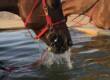
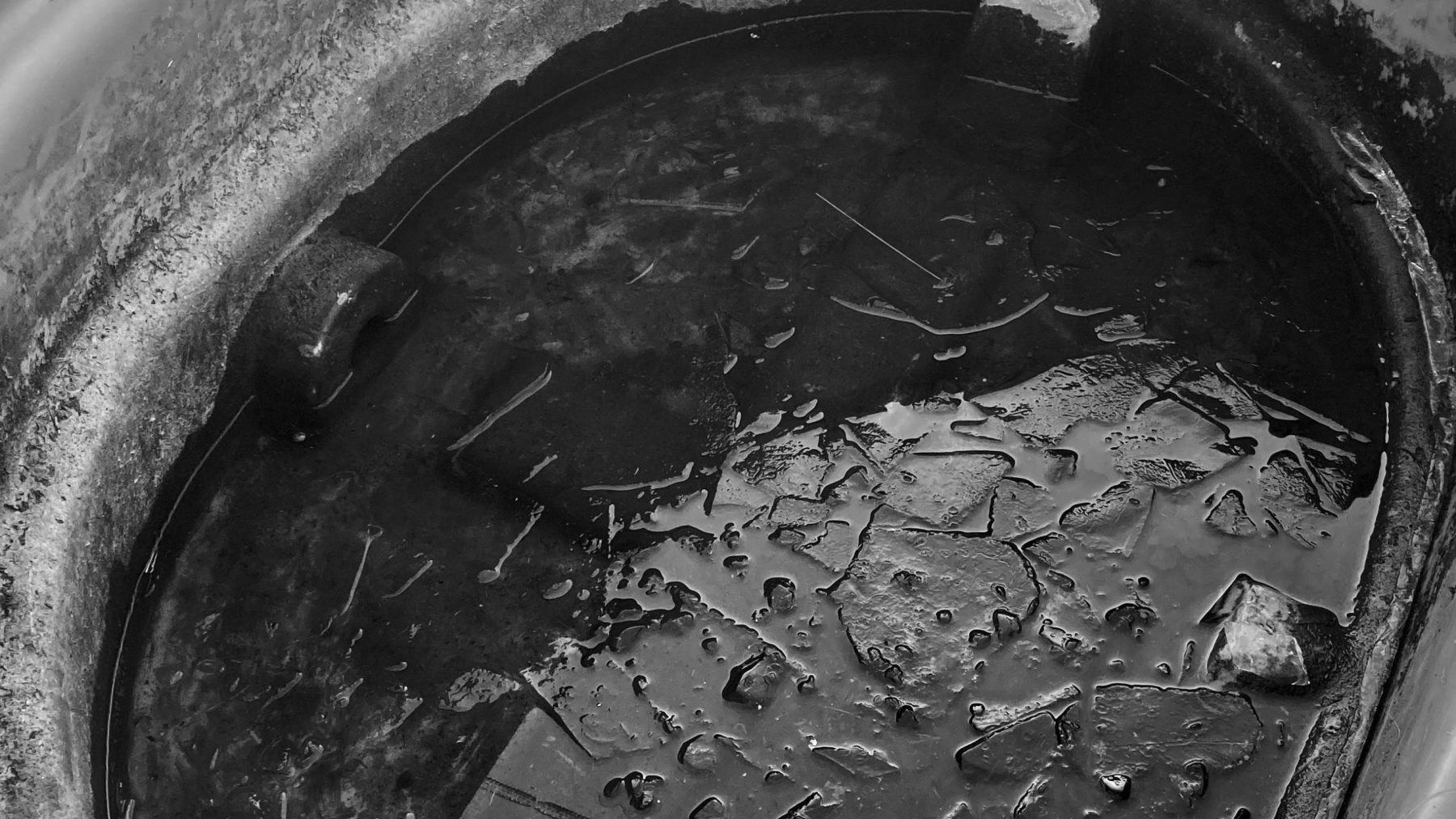
Obviously, making sure the water doesn’t freeze, and if it does, unfreeze it. Studies have shown that horses prefer their drinking water to be at around a temperate 15 degrees.
That does not mean that horses won’t drink cold and warm water, but should your horse not drink enough, try to offer him a drink at his favourite temperature.
Evoke thirst – electrolytes
Electrolytes, aka salt (sodium-chloride), are essential for the equine body to function normally, translating into an intake of around 30 grams of salt daily. Although some of that is found in their feed (grass and hay are low in sodium) and sometimes even water (test your water for sodium-chloride levels), to be sure, it is wise to add 30 grams a day to their meals, divided into two feedings to encourage uptake. A tablespoon in the morning and one in the evening should do the trick.
Be aware, some horses love the taste of salt, others turn their noses up at it. Hence, electrolytes often come in flavours 😉
A salt block can help, but only if your horse loves salt and actually licks, or downright eats, said block. Otherwise, they are pretty much just an addition.
There is a belief that horses know when they need salt. Hence, when they start licking the sweat from your hands, lick and chew wood, metal fences and dirt, it could be a sign of salt deficiency they are aware of.
However, in my experience, at least some of our domesticated horses seem to have lost the ability to sense when they need salt, or don’t like it, and simply take to drinking less to conserve these essential electrolytes in their systems. Less water = less sodium peed out.
Whilst in summer they would need even more salt depending on how much they are sweating, a subject for another article, do make sure your equine friend gets his minimum intake in winter, encouraging him to drink more.
Physical signs of low salt intake
Without going into too much detail for now, electrolytes (sodium, chloride, potassium, calcium, magnesium) play a vital role in keeping your equine partner’s body ticking over, affecting pretty much everything. And that in the right amounts.
But to keep things simple for now, sodium is the one needed in the highest quantity and found in salt.
The issue is that signs of sodium deficiency can be subtle to extreme.
Know your equine friend, watch out for the subtle signs of a change in performance, such as easily tiring or not wanting to work. Does he look lethargic, with a poor coat and skin? Or does he display more obvious signs like muscle stiffness or cramps, and weakness in the hindquarters?
Tying up is a more serious electrolyte imbalance, but more on that later.
Poor appetite, weight loss, colics, heart rate irregularities (thumps), nervous behaviour, could be other signs of electrolyte imbalances. Not sweating, anhidrosis, is an alarm call.
Dehydration gum test, the 3-second rule
A simple way to check if your horse is dehydrated at a certain moment in time is to check their gums. Yes, you could just pinch their skin at the neck/shoulder, but that doesn’t give an accurate picture, unless the horse is severely dehydrated. Skin elasticity varies, and winter fur may make it more difficult to see how long it takes for the skin to bounce back into place. It should happen immediately.
Instead, make it a habit to check your horse’s gums. Ideally, they should be pink and slippery, moist, not sticky to the feel, and definitely not dry.
If you press your finger or thumb into the gum, the spot will turn white, and as blood flows back turn to its normal colour again. Count how long it takes, with one second being the ideal and three being dehydrated.
Don’t panic if it takes up to two seconds, as long as your horse looks otherwise ok, simply make sure he drinks. Should it take longer, or your horse’s gums turn white, deep red/brown or purple blue, it is time to call your vet.
Lighter gums with no other worrying signs could simply indicate a not-so-urgent anaemia, but the other colours indicate something more life-threatening. Often, a drip is all that is needed, but it needs to have the correct ingredients and be done fast!
When you check the gums, take into account the light so as not be thrown off, as colours can look paler, or stronger. Natural light where you can see clearly is best, and don’t forget your horse may have darker pigmentation sections on the gums. Basically, know your equine partner’s gums’ normal state, and you’re ready when you need to be.
As we are on the subject of mucous colour. Should you spot yellow gums, check if the eyes are also yellow and in the case of mares, her vulva mucous. Yellow is an indicator of liver disease. Should your horse look otherwise down, not eating, sporting a fever, it could point to the dreaded tick disease, piroplasmosis. Don’t get fooled by no ticks being present; once they have had it, horses carry this disease for life, and it can come out to play during times of stress, as your equine partner’s metabolics can be compromised.
TIP:
You’ve ensured the perfect electrolyte input in your equine partner’s diet, yet he still doesn’t think he needs much water. Frustrating! But here’s what you could try.
Spice up that water!
Add some apple juice, or other flavours he loves!
Make drinking playful!
Add apple, carrot pieces and the likes so he has to dig his nose into the water and drink some to fish them out.