
'/%3E%3Cpath%20fill='%23b2b2b2'%20d='M241%20382q0%2016%2017%2026%2017%2011%2042%2011t42-11q16-11%2017-26V269H241'/%3E%3Cpath%20fill='%239f7e00'%20d='M241%20379q0%2014%208%2023%209%209%2021%209%2014%200%2021-9%209-9%209-23V269h-59'/%3E%3Cpath%20d='M241%20339v-70h59v110q0%2014-9%2023l-6%205v-68h-15v72q-8%200-14-4v-68zm59%2040c0%2022%2015%2032%2029%2032%2021%200%2030-18%2030-32v-40h-59'/%3E%3Cpath%20fill='%239f7e00'%20d='M266%20277v5h2v12h-3v-5h2v-5h-9v5h2v5h-4v9h3v18h-5v10h34v-10h-5v-18h3v-9h-4v-5h2v-5h-9v5h2v5h-3v-12h2v-5zm42%20101q0%2010%206%2017%206%206%2015%207%2010-1%2016-7%206-7%206-17v-29h-43'/%3E%3Ccircle%20fill='%230044ad'%20cx='329.5'%20cy='372'%20r='6'/%3E%3Cellipse%20fill='%230044ad'%20cx='300'%20cy='340'%20rx='16'%20ry='21'/%3E%3C/svg%3E)
'/%3E%3C/svg%3E)
Summary
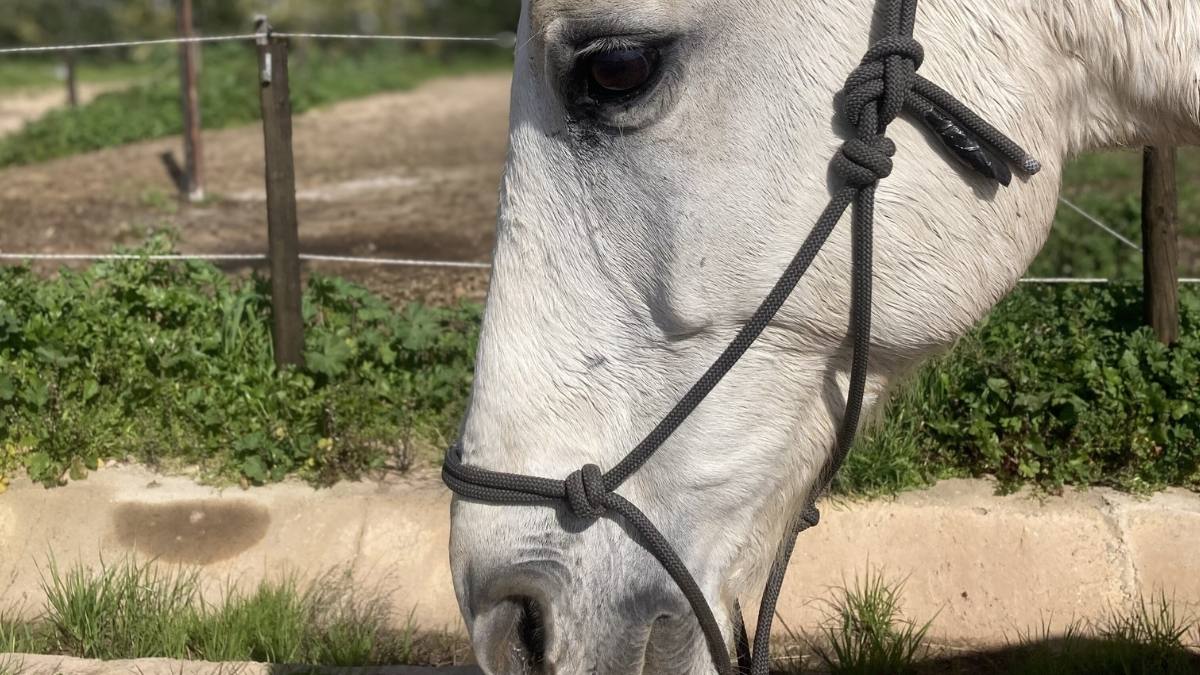
Photo Caption: This horse's face is silently signalling he is in pain. Wrinkled nose and angled eye. This is what this article is about...
If only our horses could talk our language, ‘my stifle, tendon, back… is playing up again today please don’t ride me today’. Or ‘my tummy is aching, no it is not colic it is an ulcer, which is bugging me.’ It would make communication so much easier, but not impossible.
Really, all we need to do is stop rushing, and take a moment to observe and listen, spotting the subtle signs our horse is sending us to let us know something is wrong, and take a closer look.
Because, we all have experienced a girthy horse, right? What is it trying to tell us? Often ulcers are blamed, but it could be discomfort somewhere else. Yes, we still don’t know exactly what is wrong but can start investigating, instead of brushing it off as a behavioural annoyance.
There are techniques out there, which can help us feel our equine friends´ bodies and energy to get closer to the cause. We don´t have to learn them all, we can call a specialist.
Why should we bother? Out of respect for our equine partner, and for our own safety. Ignoring the more subtle signs leads to many a horse expressing their discomfort louder until their scream. Buck, rear, bite and kick sounds familiar to anyone? The onset of a colic could lead to losing our friend, and at the very least an expensive vet bill.
When we have to listen even closer
In the horse world, just like in the human world, there are extroverts and introverts. It is the introverts we have to particularly pay close attention to. As they won’t escalate their signals to a scream. We may not know what is wrong until it is too late in the case of illness or injury. And then as we ride one day we are surprised to be catapulted by a volcanic-like explosion seemingly coming out of nowhere.
Simple daily observations
Take some time to say hello, and observe, before putting the halter on when you get your horse from its box, paddock, or pasture. Is it coming to you as usual, or turning away? Are the eyes bright and interested, or dull? During grooming, is your horse more fidgety than normal, avoids being touched in certain areas? The list goes on but you get my drift.
Signs of Illness and Injury
These tend to be more obvious. Pawing and rolling on the floor are common colic warnings. Lameness, is expressed from the obvious limp to uneven postures, and resting the sore leg. A strange posture can point to feet issues as well. A full hay net and water trough warrant further investigation. Anyone has a thermometer at hand?
Signs of discomfort during training, groundwork and ridden
The advantage we have on the ground is that we have a full picture of our horse. We can see the signs. Whilst we’re riding we can see some but have to feel more of them.
Apart from the more obvious signals we get that our equine partner is not feeling his best, such as tail swishing and refusal to move forward, there are a myriad of subtle signals, such as facial expressions. A great guide to behaviours indicating pain is Sue Dyson´s Ridden Horse Pain Ethogram, you can download it for free here.
Harmony is the goal
Our horses do so much for us, and deserve us to pay respect by listening to their woes and ‘opinions’ in return. They are our equine partners, whatever we are up to, they learn from us and we from them about them, and ourselves. The rewards and joy of a partnership in harmony is priceless.